
“Organic matter, especially nervous tissue, has a very extraordinary degree of plasticity…. The nervous system never stops changing in response to learning…. it has an amazing ability to change throughout the course of our life, allowing us to learn new things… the brain continues to create new neural pathways and alter existing ones in order to adapt to new experiences, learn new information, and create new memories.” (See, Arden, J, 2010; and, Doidge, N, 2007)
Neuroplasticity is at the core of what I facilitate in my practise. I have witnessed firsthand over the past 2 years the capacity at which the brain and nervous system can reorganise and reshape itself. The brain is plastic, and there, we can activate ‘synaptic pruning’ where we dissipate old neural pathways that are keeping us in a maladaptive state, to create new neural connections that are of higher consciousness and more adaptive to living fully in the present moment.
At its simplest, neuroplasticity is the brain’s ability to change and adapt due to experience. It is an umbrella term referring to the brain’s ability to change, reorganise, or grow new neural networks. This can involve functional changes due to brain damage or structural changes due to new learning. Plasticity refers to the brain’s malleability or ability to change; it does not imply that the brain is plastic. Neuro refers to neurons, the nerve cells that are the building blocks of the brain and nervous system. Thus, neuroplasticity allows nerve cells to change or adjust.
The brain can rewire itself creating changes not only biochemically but also morphologically in certain brain areas like neuronal networks, neuronal connectivity, and the generation of new neurons. These changes can happen not only as a result of the regular developmental process, but also trauma, chemical imbalances, experiences both positive and negative, and purposefully with intention, planning, and practice. Through neuroplasticity, we can reorganise and/or ‘snynaptically prune away’ at old and/or less used neural pathways that are keeping us in a maladaptive state, and fire up new electrical connections that work at a synapses (refers to the small gaps between neurons where nerve impulses are relayed). Neurons that are used frequently develop stronger connections. Those that are rarely or never used eventually die. By developing new electrical connections and pruning away the weak ones, the brain can adapt to the changing environment.
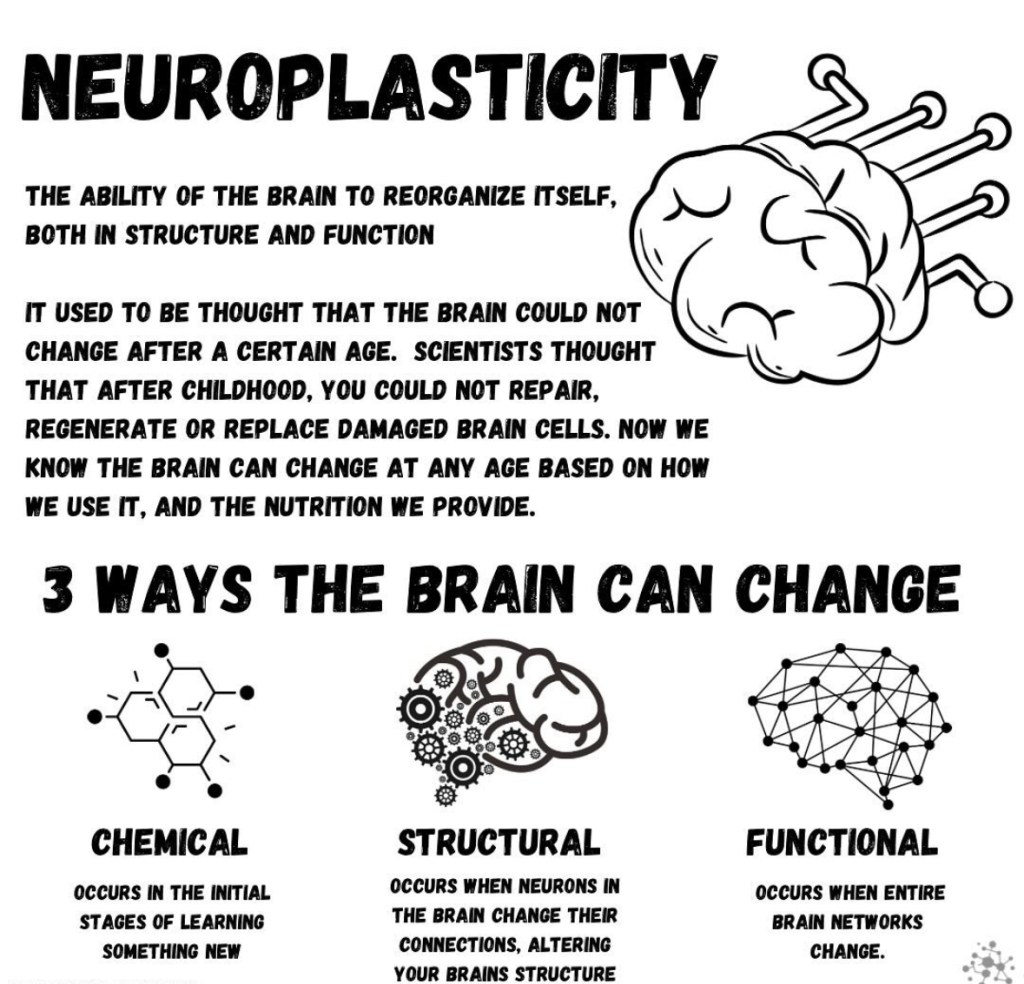
We are autonomic beings and we learn through repetition. Therefore, through cyclical neuroplasticity protocols we can fire up new energetic connections between each neuron, axom and dendrite, to create a coherent pathway between the Central Nervous System and Peripheral Nervous System. The brains neuroplastic nature means with targeted psychosomatic interventions we can rewire the brain to create electrical charges that have adaptive neuropatterns.
Your life story has been written into your nervous system, particularly during challenging times or when your stress levels were at their highest. However, It’s important to recognise that your brain and nervous system are not passive receptors of information. They actively sculpt themselves based on the cues they receive from your environment, your life experiences, and the dynamics of your relationships. Consider a single nerve cell, known as a neuron, as it maintains a chemical record of its encounters and interactions. Each neuron boasts around 5,000 tiny protrusions known as spines on its tail, enabling it to connect with other neurons. You can visualise these neurons as intricate nodes within a vast network of connections. This intricate web of connections facilitates feedback.
Depending on the nature of your experiences, some connections may become inhibited, meaning they won’t interact as frequently, while others may become excited, forging more connections in response to your encounters. This unique web of connections, often referred to as your personal neuromatrix, is similar to your fingerprint. It’s shaped by your life history, and it plays a pivotal role in determining how you respond to future stressors. What you experience today will actively influence these connections as they’re always in a state of change. The potential that you have to reshape your brain and nervous system is unlimited. And there really can be room for both past traumas as well as the present moment to be filled with new possibilities and the opportunity to write a new internal script.
For instance, psychosomatic approaches such as vagal nerve activation through massage, EMDR, auricular releasing, specific breathing exercises, can tone the parasympathetic nervous system, which in turn balances the neuroendocrine system, boosts the immune system, promotes relaxation, reduces inflammation, and relaxes brain waves. While vagal nerve toning can also stimulate and strengthen the prefrontal cortex, an area that gets damaged from experiencing cyclical trauma.
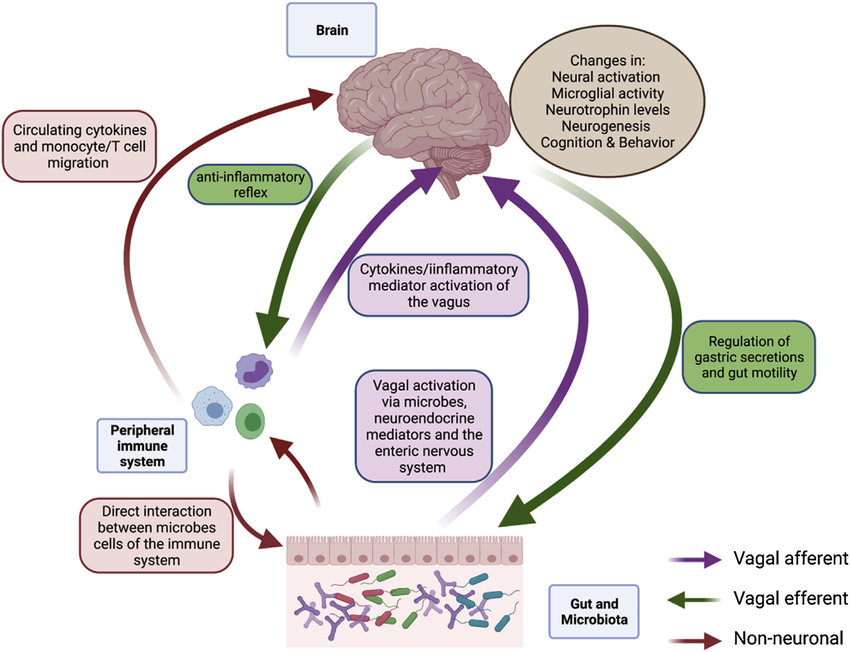
Through plasticity processes such as vagal toning, we can increase grey matter in the brain. This is the place where sensation, perception, voluntary movement, learning, speech and cognition, emotional regulation and perspective taking, takes place. Grey matter areas in the brain then provides biocommunication between other areas of grey matter and the rest of your body. Grey matter plays the most significant part in allowing us to function normally daily.
Plasticity is ongoing throughout our life span. It involves brain cells other than neurons, including glial and vascular cells. It can occur as a result of new learning, new experience, and new memory formation. We are not tied to who we are right now, and at any moment in time, we can become a different version of self. What is ‘hardwired’ can become ‘softwired’, and the self-imposed limited version of self can become a distant memory!
 Firefly Somatics™
Leave a Reply