
Your hips are the bridge between your upper body and lower body. They are at the center of your body’s movement and directly affect your ability to move efficiently. Sitting within the well of your hip and lower spine is the Psoas major muscle, one of the two muscles that makes up the iliopsoas.

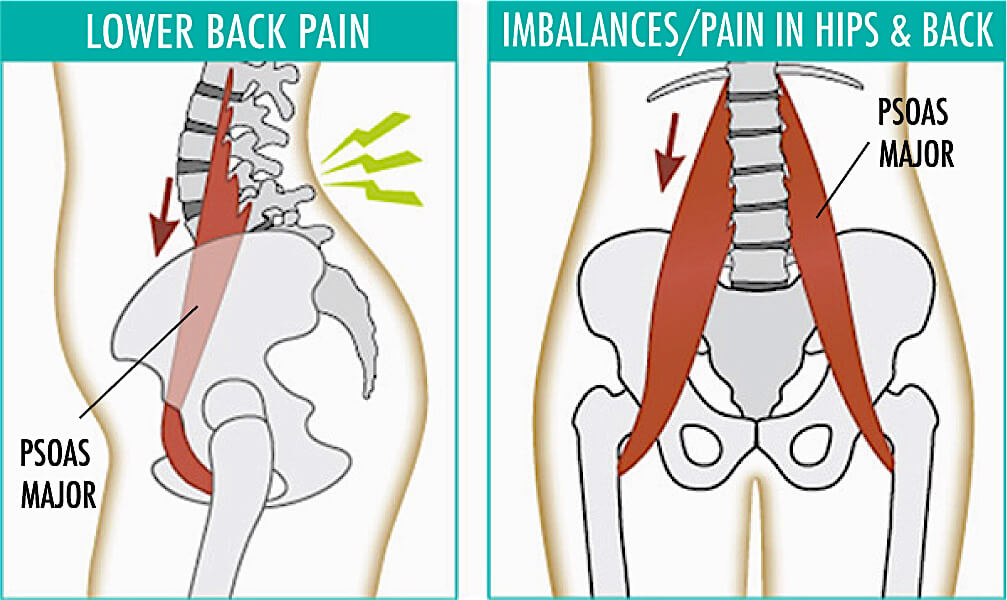
It holds many important functions in the movement of your entire body. It’s often called the “mighty” Psoas, it also helps to stabilise and protect your spine.
The Psoas is the only muscle in the whole body that connects the upper to the lower. For this reason it can cause a lot of issues which can lead to lower back pain and spinal instability. It attaches to the vertebrae of the lower spine, moves through the pelvis and connects to a tendon at the top of the femur.

It attaches to the diaphragm also, and is thus connected to how you breathe. If you’ve a tight Psoas, be sure your breathing will inevitably be affected and may appear as shallow.
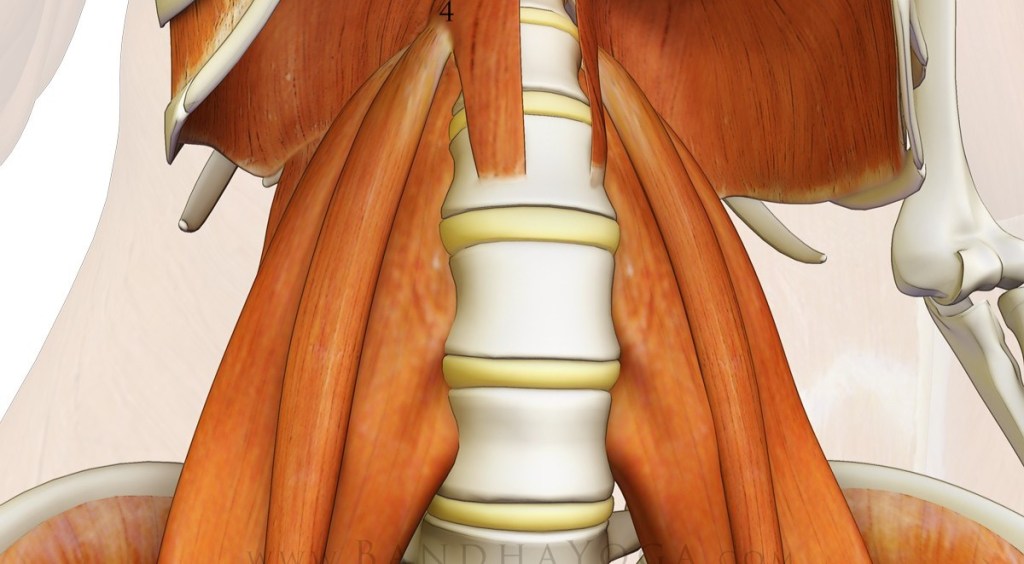
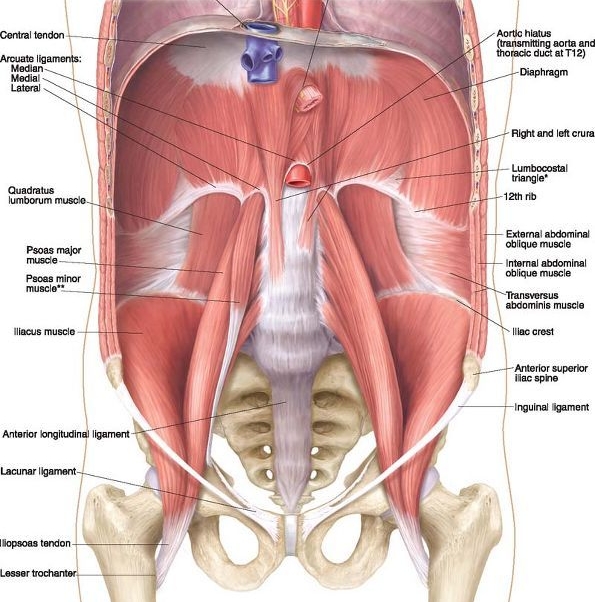
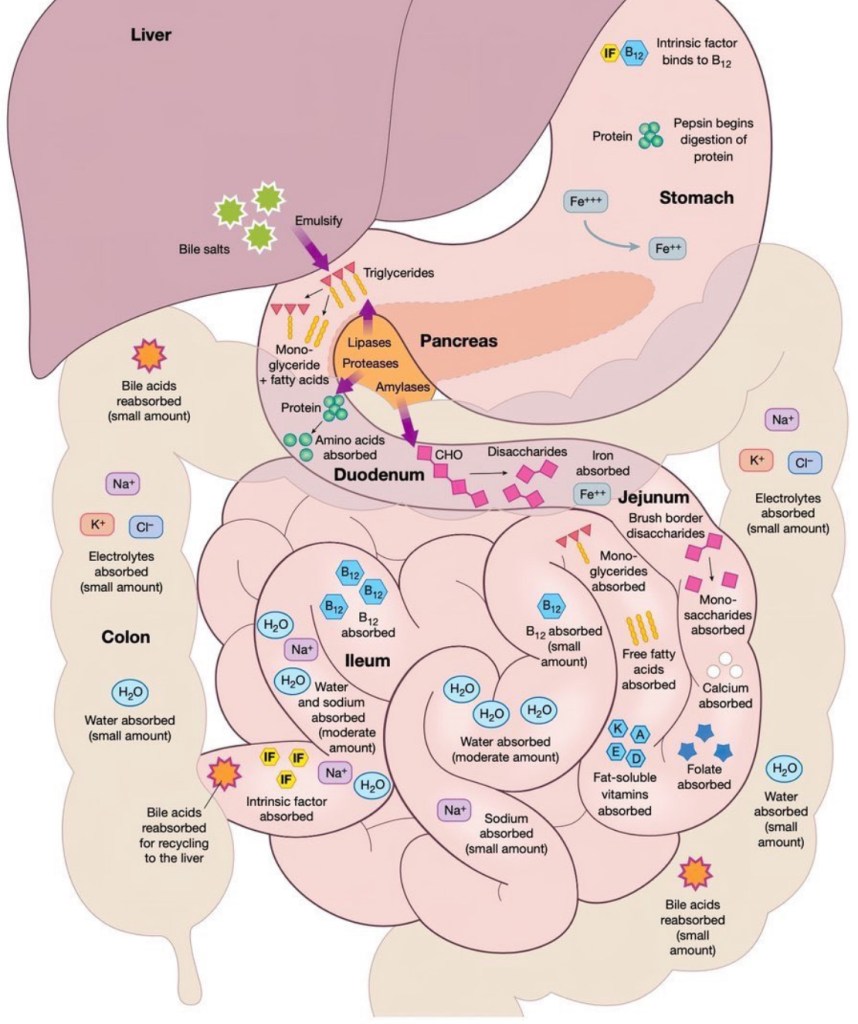
A tight psoas can also contribute to digestive issues also. Tightness can interfere with blood flow and nerve impulses to the pelvic organs and legs. When these muscles are tight your torso shortens, decreasing space for your internal organs, and this affects food being absorbed and secreted.
A functioning psoas muscle creates a neutral pelvic alignment, stabilises the hips, supports the lower spine and abdominal area, supports the organs in the pelvic cavity and abdominal region, gives better mobility and keeps the core strong.
Below are some of the best Functional And Dynamic Exercises That Release, Mobilise and Strengthen The Muscle Of The Soul
1. PSOAS stretch on Plyo Box or Bench. To deepen the stretch, extend all the way down onto the plyo box or bench, keep the forward leg in a lunge. Lean into the lunge and create a slight internal pelvic tilt, drawing inwards from the coccyx. Aim to straighten the back leg that is laying on the bench / plyo. For more effect add in tri-planar and rotational movements, using the breath to navigate the deepened portion of the stretch.
2. Kneeling hip flexion stretch. You can see from the video I am leaning into a forward lunge, allowing the hind leg to stretch. Making sure to engage the glutes also, pulling the pelvis slightly inwards. Gradually working off the yoga block and onto the floor. Here you can add in tri-planar dynamic movement in and out of the stretch, with isolation on the stretch, trunk rotation, elevating the arm to deeper the stretch
3. Active Release using a hard lacrosse ball and KB for added pressure, navigating the release with deep breathing. To mobilise, plank your foot into the ground and perform heel drags, with internal and external rotation or the hip. As you adjust to the weight you can use a heavier KB. These are called Psoas Crushers. I sometimes use the head of a broomstick also in a standing position where I can add my whole body weight.
4. Foam Roller Dead Bug hold, with neutral spine stabilisation
5. Bird Dog with Lumbar Engagement. For me, the trunk movement is to help mobilise my lumbar which is generally braced and rigid, due to neuromechanical issues caused through years of Powerlifting, Bodybuilding and CrossFit
6. Alternate Dead Bugs with Resistance Band, supine state, keeping the spine neutrally stable, driving the navel into the ground and not allowing the low back to lift
7. Segmented Cat Cow, exhaling on the flexion portion, sucking the navel in, and driving the pelvic area and glutes inwards
How to self release the Psoas…
What you need
✔️Hard lacrosse ball
✔️Hard object to add pressure with eg kettlebell, bottle water, or detergent bottle like in footage
This can be done on a plinth OR floor. I prefer floorwork as it offers a grounding effect. While it offers a sense of safety if client moves into stretch/myotatic reflex activation. I’ve used a plinth when I first began my practise and promptly switched to floorwork. The plinth (in my experience) is not as effective, I can feel the nervousness in clients as the bed shakes with them.
What to do:
✔️drive leg of working side into the ground
✔️locate area with finger compass: two inch across from belly button, 2 inch down, place hard ball on area and gently add pressure with object
✔️breathe into the ball, adding pressure on exhale
✔️mobilise with lateral movement: with foot planted & knee extended inwards, slowly bring leg externally and internally (adduction & abduction)
✔️mobilise with extension and flexion, drawing leg outwards and inwards; you can also do heel drags here
✔️stretch working leg: plant non working leg on floor and “hug” working leg into chest, breathe and relax into breath
In the above footage, you will see my client’s system quickly shifted into a reflex. The “release” you see is resulting from increased alpha motor neuron activity and an autonomic regulation of the length of the hip flexor muscles. What happens here is, the muscle spindles detects the stretch and become “excited”. They send an action potential (electric signal) to motor neurons which then causes the muscle to contract & protect. This is why it’s essential to access the area through shortened and lengthened Range of Motion,
 Firefly Somatics™
Leave a Reply