
Parasympathetic stimulation of the lacrimal gland is responsible for tear production, and this innervation originates from fibres conveyed in the facial nerve.

The lacrimal glands are paired exocrine glands, one for each eye, found in most terrestrial vertebrates and some marine mammals, that secrete the aqueous layer of the tear film. In humans, they are situated in the upper lateral region of each orbit, in the lacrimal fossa of the orbit formed by the frontal bone

Since the parasympathetic innervation of the lacrimal gland occurs via seventh cranial nerve, a co-activation of the vagus nerve with the production of emotional tears is likely the consequence of the activity of higher brain centre’s stimulating parasympathetic fibres in both of these nerves. Simply, parasympathetic impulses to the lacrimal gland are carried by the vagus nerve, as shown in the following diagram.

Parasympathetic secretomotor neurons stimulate the secretion of lacrimal fluid. Preganglionic parasympathetic fibres from the central nervous system (CNS) reach the pterygopalatine ganglion via the greater petrosal nerve (a branch of the facial nerve) and the nerve of the pterygoid canal.
The lacrimal gland also receives autonomic nerve fibres from the Parasympathetic trunk. Preganglionic fibres are carried in the greater petrosal nerve (branch of the facial nerve) and then the nerve of pterygoid canal, before synapsing at the pterygopalatine ganglion. As such, the parasympathetic nervous system, which is activated by the vagus nerve, increases ones tear volume.
It is for this reason (amongst many others) that clients will ‘cry’ in session and may not even know ‘why’. Cathartic releasing is highly common.
Also important to point out is the fact that the lacrimal gland is attached to the centre in the brain that controls our emotions: The Limbic System. When certain receptors in the limbic system are activated by emotions, the lacrimal gland is stimulated and we produce tears.
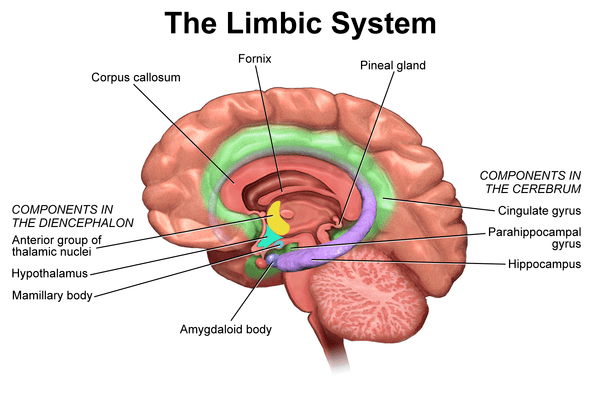
The limbic system, or, more specifically the hypothalamus, has a degree of control over the autonomic system. The parasympathetic branch of the autonomic nervous system controls the lacrimal glands via the neurotransmitter acetylcholine through both the nicotinic and muscarinic receptors. Acetylcholine is a potent stimuli of lacrimal gland protein and electrolyte/water secretion. AcH is the main neurotransmitter of the PNS and is secreted at the nerve ending, via vagal activation.

Crying for long periods of time releases oxytocin (neurohormone connected to love and can be triggered via co-regulation) and endogenous opioids, otherwise known as endorphins. Oxytocin offers you a sense of calm and well-being (you may feel it when you hug your dog, or are held by a person you love).

These feel-good chemicals help to ease both physical and emotional pain. Once the endorphins are released, your body may go into somewhat of a numb stage until processing and integration is complete.
 Firefly Somatics™
Leave a Reply