
Abandonment. It’s a word we hear often in healing spaces, but what if we’ve been looking at it too narrowly?
Most people think abandonment is a psychological issue. A fear of being left. A response to emotional neglect.
But in truth, abandonment is not just emotional or relational — it’s physiological. It’s neurological. It’s cellular.

In our work with clients inside The Firefly Method®, we see abandonment show up in posture, digestion, breath, inflammation, gut-brain communication, and chronic looping thoughts. It doesn’t live in the “mind” — it lives in the body-mind pathway.
If you’ve ever felt like no amount of talk therapy can reach the depth of your heartbreak, you’re not broken — you’re right. This is biology. And biology can be rewired.
The Body’s Response to Abandonment: What Actually Happens Inside
When the threat of abandonment is perceived — whether in infancy, childhood, or adulthood — the body enters a survival state. And it doesn’t take a dramatic event. Emotional absence, inconsistent parenting, or relational withdrawal can activate the same cascade of responses as physical danger.

Neurological Breakdown
• The vagus nerve — responsible for regulating rest, digestion, and heart rate — loses tone.
• The brainstem activates the fight-flight-freeze-fawn response, pulling us out of social engagement.
• Prefrontal cortex function drops, impairing emotional regulation and decision-making.
• The limbic system (especially the amygdala) becomes overactive, tagging abandonment as a “life or death” threat.
Physiological Shift
• Cortisol and adrenaline spike, flooding the system with stress hormones.
• Heart rate increases, breath becomes shallow, and digestion slows or shuts down.
• The gut-brain axis is disrupted, compromising serotonin production and emotional regulation.
• Chronic inflammation begins to rise, contributing to fatigue, IBS, autoimmunity, and even pain conditions.
Somatic and Structural Response
• Fascia contracts — creating a tightening or “shrinking in” sensation in the body.
• Muscles brace — particularly around the neck, shoulders, diaphragm, and pelvic floor.
• The neuromuscular system begins to imprint defensive postures (like forward-head, slumped shoulders, frozen jaw).
• Breath becomes trapped in the upper chest, cutting us off from grounding, presence, and emotional release.
Developmental & Attachment Origins: Why It Starts So Young

Most abandonment wounds begin in infancy or early childhood, where a child’s survival is literally dependent on connection and co-regulation. When attunement is inconsistent or caregivers are emotionally unavailable, the infant’s system codes that as a threat.

Without sufficient oxytocin (the bonding hormone) or mirror neuron feedback from safe caregivers, a child’s brain:
• Doesn’t learn to self-regulate
• Associates connection with threat
• Internalises the belief: “I am not safe unless I perform, please, or disappear.”
This lays the groundwork for anxious attachment, avoidant patterns, people-pleasing, chronic hyper-independence, and even trauma bonds — relationships that mimic love but are rooted in nervous system survival strategies.
Why Traditional Talk Therapy Often Falls Short
Abandonment doesn’t just live in memory.
It lives in muscle tone, breath patterns, gut function, and implicit memory — the body’s pre-verbal, sensory record of experience.
If we don’t address the bottom-up signals (from body to brain), the top-down strategies (like mindset work or cognitive reframing) won’t stick. And we will repeat the cycle of attachment wounding.
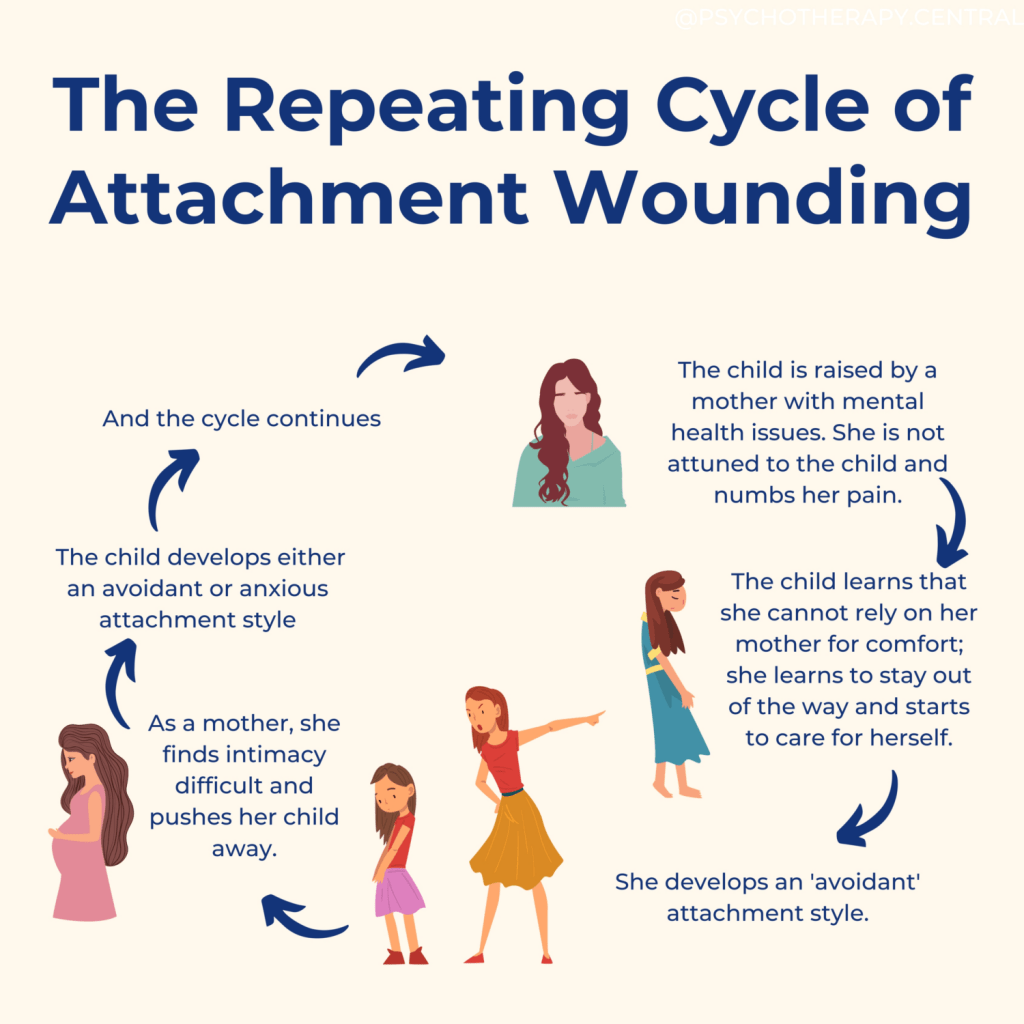
How We Repattern Abandonment from the Inside Out
With The Firefly Method®, we work with the body first.
We don’t just talk about abandonment.
We alchemise it.
We move the energy. We finish the trauma loop. And we teach the nervous system how to rewire, restore, and remember its original rhythm of safety. Some of the Healing Modalities we use within The Firefly Method® to address Abandonment Wounding include (but are not limited to):
- Vagus Nerve Toning: We use breath, vocal vibration, and somatic sequencing to restore vagal tone, bringing the body out of threat and into safety. This calms the heart, supports digestion, and returns you to social connection.
- Fascial Release: Trauma lives in the fascia. Through gentle somatic touch, micro-movement, and fascia unwinding, we unravel the frozen tension in the connective tissue — allowing emotions and breath to move freely again.
- Neuromuscular Repatterning: We apply trigger point release and micro-somatic cueing to dissolve bracing patterns. This helps the body shift out of protective postures and reclaim fluid, embodied presence.
- Digestive Rebalancing: The gut is central to emotional health. We use nervous system support to re-regulate peristalsis, enzyme flow, and gut-brain feedback loops — restoring nourishment, mood balance, and internal trust.
- Neuroplastic Rewiring: Using guided imagery, memory recall, somatic movement, and nervous system retraining, we create new neural associations with safety, connection, and love — literally changing the brain-body story.
- Inner Child and Attachment Repair: We meet the “younger parts” who first felt abandoned — and offer the attunement, repair, and protection they never received. This breaks the cycle of re-enactment and builds new patterns of self-trust.
- Cellular Reordering: Through somatic energetics, we guide the body back to its original blueprint: love, presence, and coherence. This anchors the transformation at the deepest level — your cells.
To conclude….
Abandonment Isn’t Your Identity. It’s a Pattern — and It Can Be Rewired. You’re not “too much.” You’re not broken. Your nervous system has simply been trying to protect you. But protection is not the same as connection. And survival is not the same as love. Through body-based repair, you can return to the truth beneath the trauma. You can learn that love doesn’t have to feel like threat. That regulation doesn’t have to mean disconnection. That home is not a person — it’s your inner rhythm, restored.
You come home…
To your body. To your breath. To the truth of who you’ve always been. This is what The Firefly Method® echoes at its core. We invite you to come home, back to LOVE — in your cells, in your trajectory and story, and in your nervous system.
 Firefly Somatics™
Leave a Reply