
Co-regulation is the process where our nervous system naturally balances and stabilises itself through connection with others. It is an interpersonal, neurological, and biological phenomenon, deeply embedded in our physiology and early development. Our vagus nerve, mirror neurons, and systems of heart and somatic coherence work together to attune us to the energy of those around us.
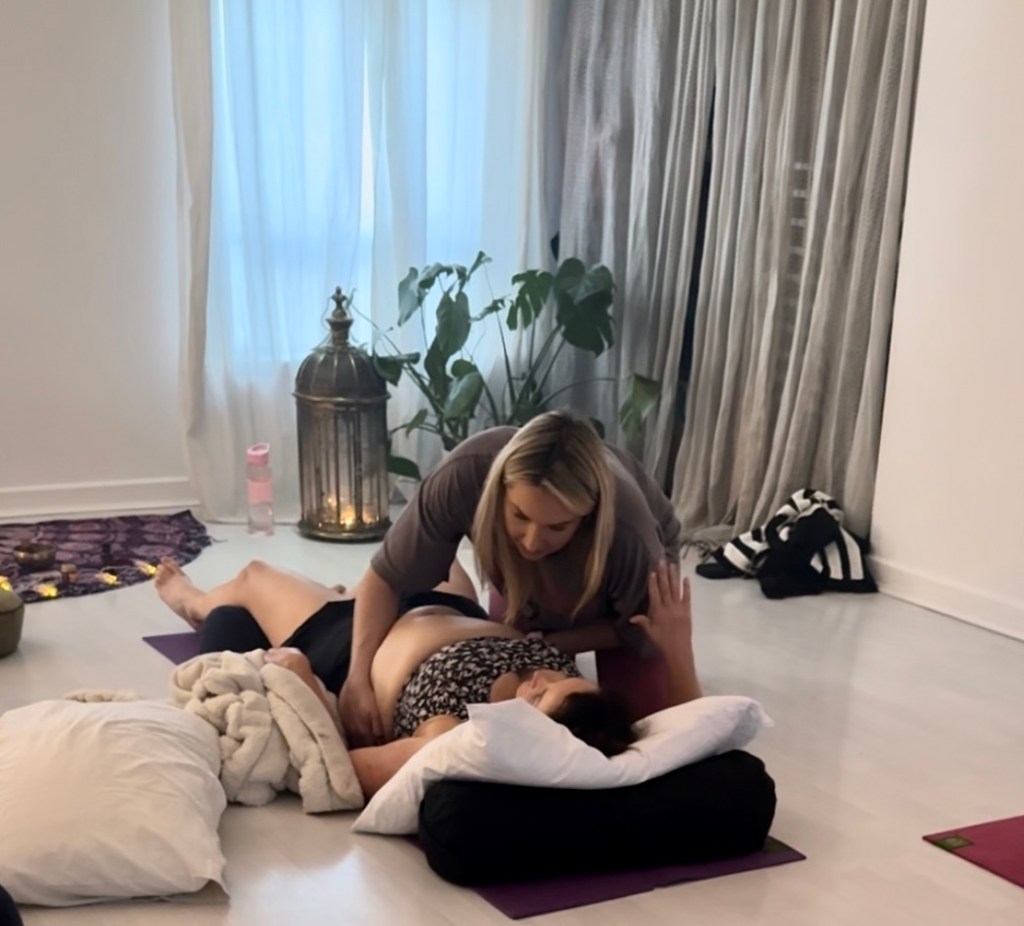
Co-regulation begins before birth. Even in utero, a developing baby hears its mother’s voice, rhythms, and emotional tone, which become signals of safety. After birth, these cues are paired with facial expressions, touch, and gaze. As infants grow, they rely on caregivers to help regulate emotional states—whether after a minor fall or an overwhelming sensory experience. From childhood, our nervous system learns patterns of attunement based on early attachments, which shape how we respond to relationships today. If our caregivers were calm and responsive, our nervous system learned to feel safe and regulated; if they were inconsistent or dysregulated, we may carry sensitivity to others’ emotional states and unconsciously mirror their tension. This early attunement lays the foundation for secure or insecure attachment styles.
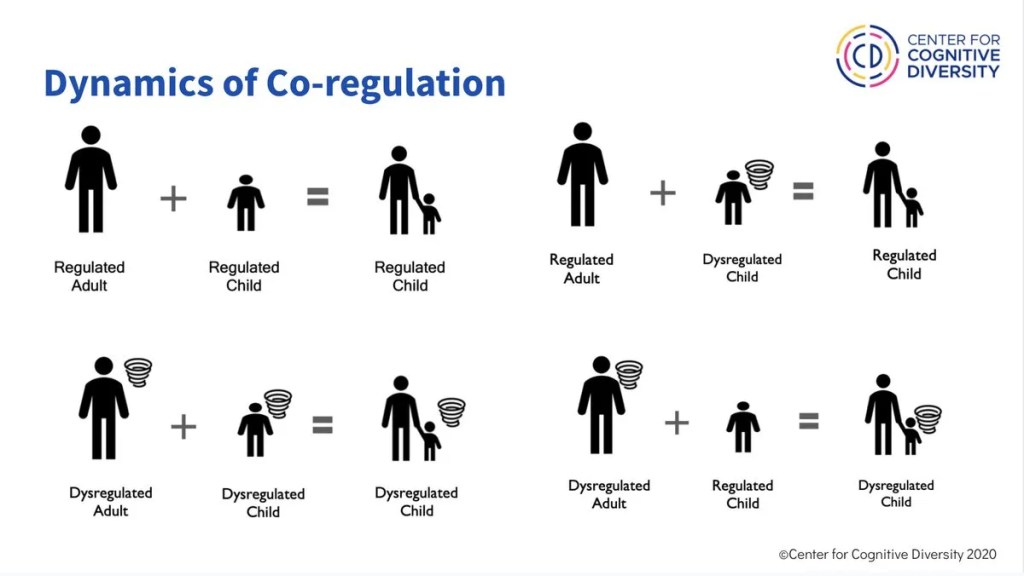
On a biological level, co-regulation is mediated by powerful chemical messengers. Oxytocin—the bonding hormone—is released through safe touch, eye contact, and nurturing vocal tone, deepening trust and soothing stress. Cortisol, the stress hormone, is regulated in tandem; infants literally borrow the regulation of their caregivers’ cortisol cycles. If a parent is calm, the child’s cortisol lowers; if the parent is stressed, the child’s system spikes in response. Over time, these interactions hardwire pathways in the brain, strengthened by myelination during critical developmental windows, that determine how easily we return to safety in adulthood.
When we are in the presence of another person, our body picks up subtle cues—their tone of voice, breathing patterns, posture, and facial expressions—and our nervous system responds, either calming or activating in response. Mirror neurons in the brain amplify this process, allowing us to feel what others feel. This explains why we catch a yawn, smile when someone smiles, or tense when someone near us is anxious. Our hearts also participate: through the science of heart rate variability (HRV), we know that our heart rhythms can literally synchronise with others during attunement, a phenomenon known as heart coherence.
Signs that co-regulation is happening include shifts in heart rate, changes in breathing, chest tightness or heaviness, fatigue, emotional fluctuations, and even digestive or muscular tension. Spending time with people whose systems are dysregulated can pull on our energy, leaving us drained, short of breath, or emotionally reactive—even when we’re not consciously aware of it. Conversely, being with someone calm and regulated allows our nervous system to soften into safety.
Polyvagal Theory highlights the critical role of the vagus nerve in this process. The vagus forms the backbone of the social engagement system, linking face, voice, and heart to the brainstem. In a ventral vagal state—sometimes called the “green zone”—we feel safe, connected, and able to co-regulate. When someone else is in fight-or-flight (sympathetic activation) or in freeze (dorsal vagal shutdown), the presence of a regulated other can gently invite them back towards safety through tone of voice, gaze, empathy, and resonance.
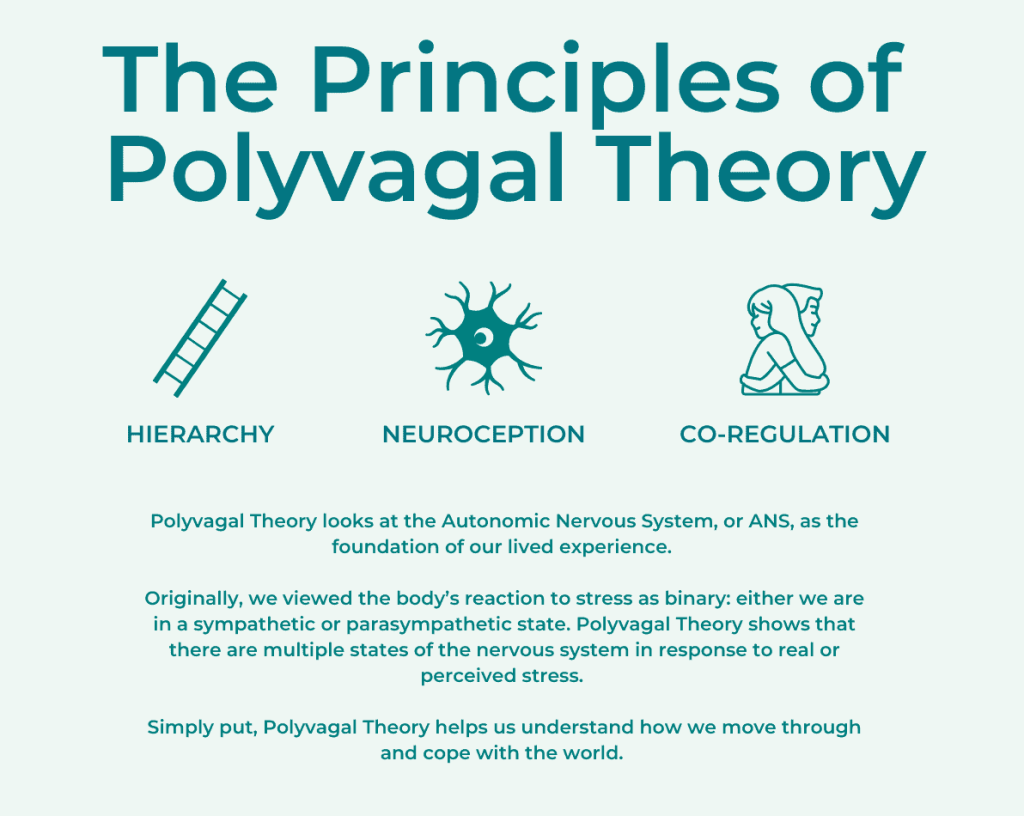
The nervous system progresses through different states, each shaping co-regulation:
- Ventral Vagal (Social Engagement): Safety, connection, play, and learning. Ideal for attunement and healing.
- Sympathetic (Fight/Flight): Mobilisation, energy, and defence. Co-regulation here provides containment and grounding.
- Dorsal Vagal (Freeze/Shutdown): Immobilisation, collapse, or dissociation. Co-regulation requires patience, empathy, and gentle safety cues to restore presence.

Importantly, nervous system healing cannot happen in isolation. While self-regulation practices are valuable, our biology is wired for relational healing. True repair occurs in the exchange of presence, voice, touch, and empathy—in safe relationships where our nervous system learns new patterns of trust and safety. Neuroplasticity ensures this repair is possible at any age; even if early attachments were inconsistent, safe and consistent co-regulation later in life can literally rewire the brain.
When one’s nervous system is regulated, balanced between sympathetic (masculine) and parasympathetic (feminine) energies, it radiates stability. In that nervous system presence, others begin to attune to the stabilised nervous system, helping another to shifting into a more calmer, ventral vagal state.
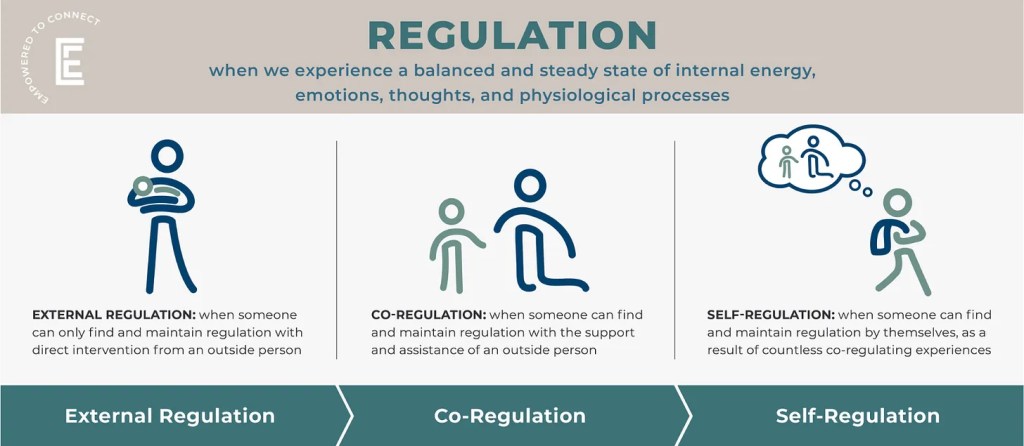
Be intentional with who you share your energy with. The nervous system is a relational organ—it absorbs and reflects the states of those around you. True healing is not something we do alone; it emerges in the exchange, presence, and energy we share with one another.
 Firefly Somatics™
Leave a comment