
When most people hear the word trauma, they think of dramatic or extreme events: a car accident, the sudden death of a loved one, abuse, or a natural disaster. But trauma is not actually about the event itself. Two people could go through the very same experience—one walks away shaken but okay, while the other carries deep wounds that affect their health and relationships for years.

So what’s the difference?
Trauma is not the story of what happened. Trauma is the imprint it leaves on your nervous system and body. It is the experience of overwhelm, helplessness, or shutdown when the system feels it cannot cope. This is why trauma cannot be measured by the size of an event, but only by its impact on the individual.
For some, trauma may be linked to a specific moment—like a miscarriage, the breakdown of a marriage, or the decline of health. For others, it can be an accumulation of smaller, repeated experiences over time—like neglect, chronic stress, or growing up in an unpredictable household. And for some people, there is no single memory to point to, yet their body holds the evidence of unresolved trauma every single day.
Why Some People Are Traumatised and Others Are Not
It can be confusing to see two people experience the same situation and respond so differently. One may say, “That was difficult, but I’ll be fine.” The other may feel shaken to the core, unable to return to normal life.
The difference lies in the state of the nervous system. If a person already has unresolved stress patterns or earlier trauma, their system is more likely to interpret a new challenge as threatening. This subconscious scanning for danger, known as neuroception, plays a crucial role in how experiences are processed.
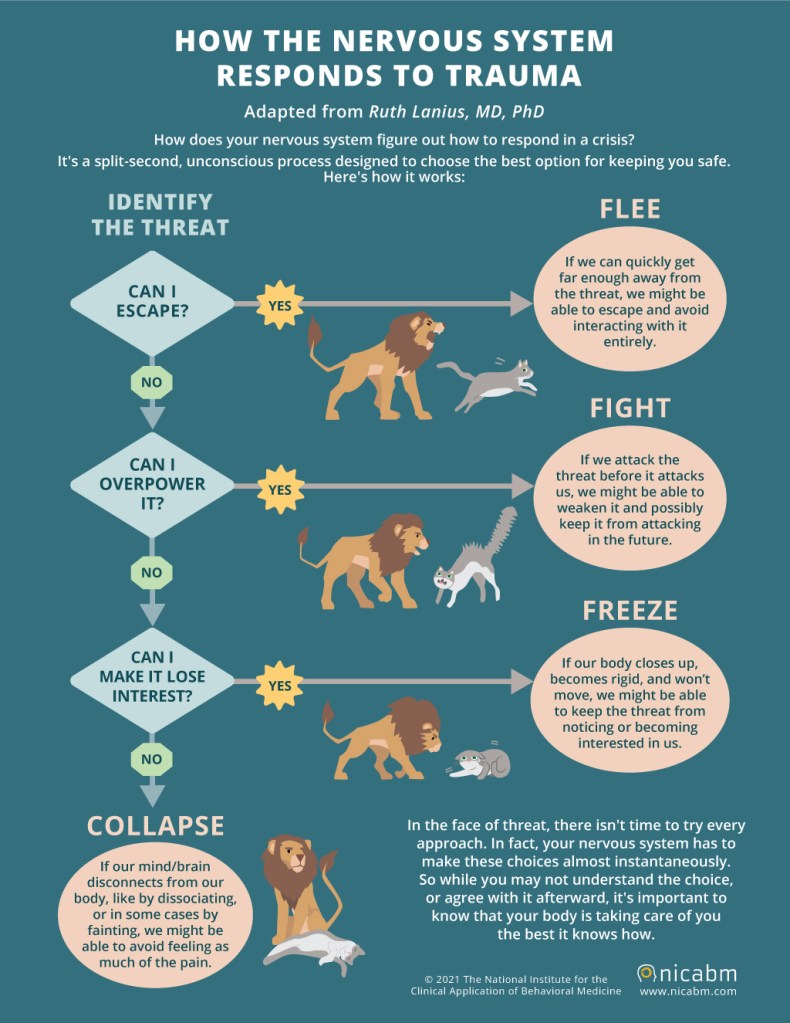
In other words, trauma isn’t about the event itself—it’s about how safe or unsafe the body feels when it happens.
Stress and Trauma Are Not the Same
Stress and trauma are often spoken about as if they are the same thing, but they are not.
- Stress is the body’s attempt to stay in homeostasis—a healthy internal balance where all your systems (digestion, circulation, immunity, hormones) work together. Stress may leave you feeling pressured or tired, but the body is still able to bounce back once balance is restored.
- Trauma occurs when the system is overwhelmed and cannot return to balance. Instead of bouncing back, the body gets stuck in protective patterns that linger.
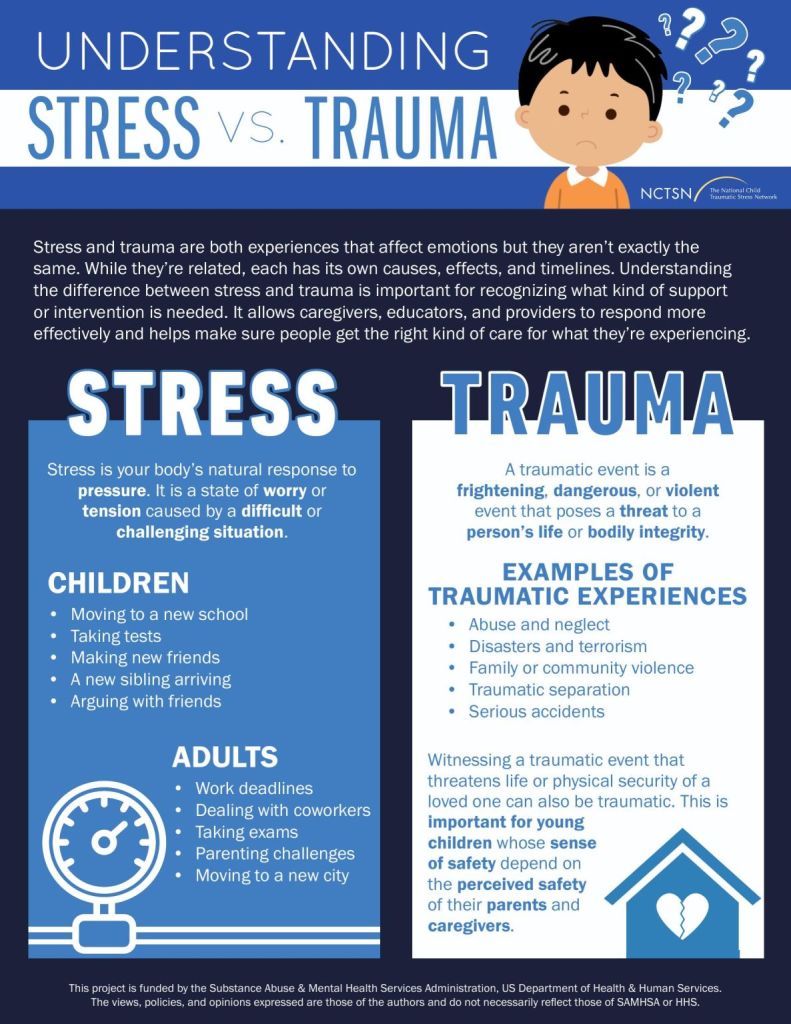
Think of stress as the body saying: “This is a lot, but I can handle it.”
Trauma is the body saying: “This is too much. I can’t cope.”
The Three Main States of the Nervous System
Our nervous system constantly shifts between different survival states. Understanding these helps us recognise what’s happening in our body and why we feel the way we do.
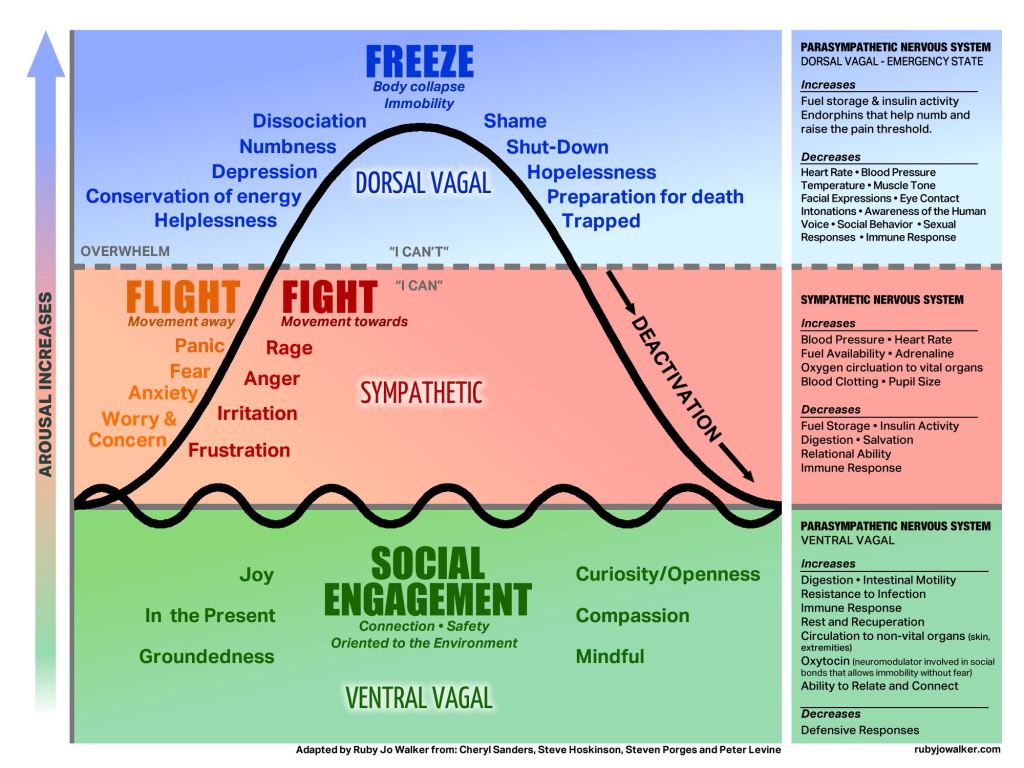
1. Fight or Flight (Red Zone)
This is the classic stress response. The sympathetic nervous system takes over, preparing the body to run from danger or confront it head-on.
Signs of fight or flight include:
- Fast heart rate and shallow breathing
- Anxiety or agitation
- Racing thoughts and difficulty sleeping
- Feeling restless, tense, or “on edge”
This is a high-energy state. The body burns fuel quickly, muscles tighten, and the system becomes hyper-vigilant, scanning for threats.
2. Freeze (Blue Zone)
Freeze is not just another version of stress—it is the hallmark of trauma. When the body feels it cannot fight or flee, it shuts down. The parasympathetic nervous system (through the dorsal vagal pathway) puts on the “brakes,” conserving energy as a last form of survival.
Signs of freeze include:
- Numbness or emotional disconnection
- Chronic fatigue or heaviness
- Flat voice, blank stare, or “checked out” feeling
- Collapsed posture or inability to act
- Feeling stuck, hopeless, or detached from others
Freeze is often mistaken for laziness or apathy, but it is neither. It is a deeply rooted survival strategy.
3. Shutdown (Deep Blue Zone)
Shutdown is an even deeper collapse than freeze. If freeze is “tense immobility,” shutdown is full withdrawal. The system becomes exhausted and disengaged.
Signs of shutdown include:
- Emotional emptiness or flatness
- Very low energy or faintness
- Feeling detached from surroundings
- A sense of collapse or resignation
While freeze holds tension, shutdown is a limp, collapsed state. Both are ways the body protects itself when it feels overwhelmed.
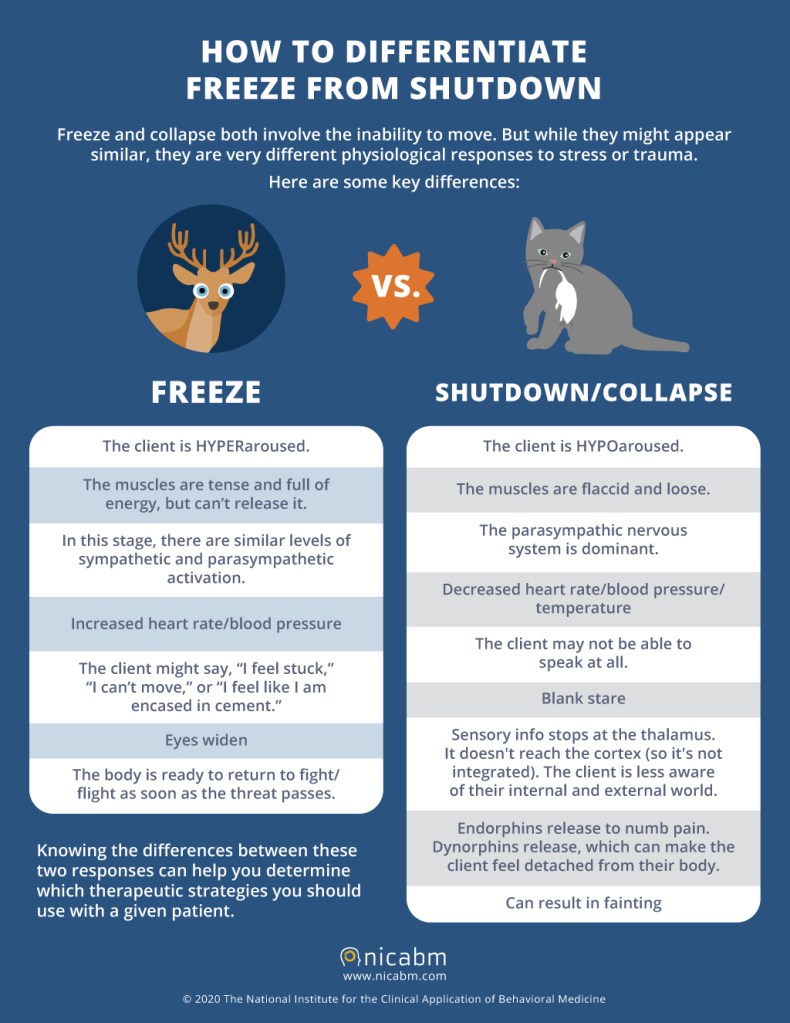
How Freeze Affects the Body and Mind
Being stuck in the freeze state can affect almost every area of life. Over time, it can manifest as:
- Physical symptoms: fatigue, chronic pain, jaw clenching, digestive issues, inflammation, hormonal imbalances, immune weakness, low blood pressure.
- Cognitive symptoms: brain fog, memory lapses, difficulty speaking or finding words.
- Emotional symptoms: numbness, hopelessness, depression, lack of joy or motivation.
- Relational symptoms: feeling disconnected, unable to express needs, withdrawing from loved ones.
Long-term freeze is linked to conditions such as fibromyalgia, irritable bowel syndrome (IBS), insomnia, adrenal fatigue, depression, and even substance dependence as the body searches for ways to cope.
Common Triggers for the Freeze Response
The freeze response can be triggered by many factors, often tied to past trauma or unresolved stress.
- Emotional triggers: overwhelming fear, shame, guilt, grief, or reliving traumatic memories.
- Environmental triggers: loud noises, chaotic or crowded spaces, confinement, sudden danger.
- Relational triggers: conflict, rejection, abandonment, power imbalances, emotional neglect.
- Bodily triggers: chronic illness, fatigue, pain, hormonal imbalances, sensory overload, nutritional deficiencies.
Recognising your personal triggers is an essential step towards healing.
Why It Matters to Understand Freeze
Freeze is often misunderstood because it looks like inaction. To the outside world, someone may seem unmotivated, disconnected, or lazy. But in truth, freeze is the body’s way of saying: “I can’t cope right now.”
The tragedy is that while freeze protects us in the short term, staying in it too long can keep us from living fully, connecting with others, or healing from past experiences.
By learning to recognise the signs of freeze in ourselves, we can begin to meet our body with compassion rather than judgement. This gentle awareness is the first step in guiding the nervous system back towards balance and connection.
Moving Out of Freeze and Into Healing
Healing doesn’t happen by forcing or pushing through. It begins with small, safe steps that signal to your nervous system: “It’s okay now. You are safe.”
This might look like:
- Building awareness of body signals and triggers
- Practising grounding and self-regulation techniques
- Creating environments and relationships that feel safe
- Working with trauma-informed practitioners who can guide you gently
Healing is not about erasing the past, but about teaching the nervous system that it no longer has to stay in survival mode.
Final Reflection
Trauma is not your fault. It is not a weakness or a flaw. It is your body’s natural way of protecting you when life felt overwhelming.
The good news is that trauma patterns can shift. With awareness, compassion, and the right support, your nervous system can learn new pathways. You can move from immobility to resilience, from numbness to connection, and from survival to a fuller, more vibrant life.
Trauma may shape your story, but it does not define your future.
Healing is possible.
 Firefly Somatics™
Leave a Reply