
Emotions are not merely mental experiences — they are embodied phenomena. Every thought, belief, or feeling leaves a trace in the nervous system, organs, muscles, fascia, and even at a cellular level. When emotions such as anger, frustration, or self-criticism are not fully processed, they remain stored physically and psychologically, affecting behaviour, physiology, and overall well-being.

Below explores the psychological, somatic, and nervous system aspects of anger and emotional storage, the physiology behind somatic release, and how The Firefly Method® integrates all systems for whole-body healing.
The Psychosomatic Connection: Beliefs, Thoughts, and Stored Emotion
In somatic therapy, it is common for limiting beliefs or intrusive thoughts to surface alongside physical releases. For example, while working on tension in the upper ribcage around the liver, stomach, and solar plexus, a client may experience a recurring thought such as “I’m not good enough.”
This demonstrates the psychosomatic loop:
- Cognitive Pattern: A belief or thought, often developed in early life, generates emotional stress
- Emotional Response: Anger, shame, or self-criticism arises in response to the cognitive pattern.
- Somatic Holding: The body responds by storing tension in muscles, fascia, organs, or spinal segments.
Interrupting this loop requires both somatic awareness and cognitive recognition. Neuroscience demonstrates that the limbic system — particularly the amygdala and hippocampus — encodes emotional experiences, while the prefrontal cortex supports awareness and regulation. Somatic therapy bridges the mind-body gap, allowing stored emotion to be released and integrated.
Physiological Storage: Liver, Stomach, and Solar Plexus
Both Western medicine and traditional Eastern medicine recognise that certain emotions are held in specific organs:
- Liver: Chronic anger, frustration, and irritability are commonly stored here. Tension often manifests in the upper ribcage, intercostal muscles, and fascia.
- Stomach & Solar Plexus: These areas represent personal power, confidence, and self-worth. Emotional blocks here can produce digestive discomfort, shallow breathing, or mid-back tightness.
- Solar Plexus & Autonomic Regulation: The solar plexus houses the celiac plexus, a major hub of the autonomic nervous system, which influences both sympathetic and parasympathetic responses.
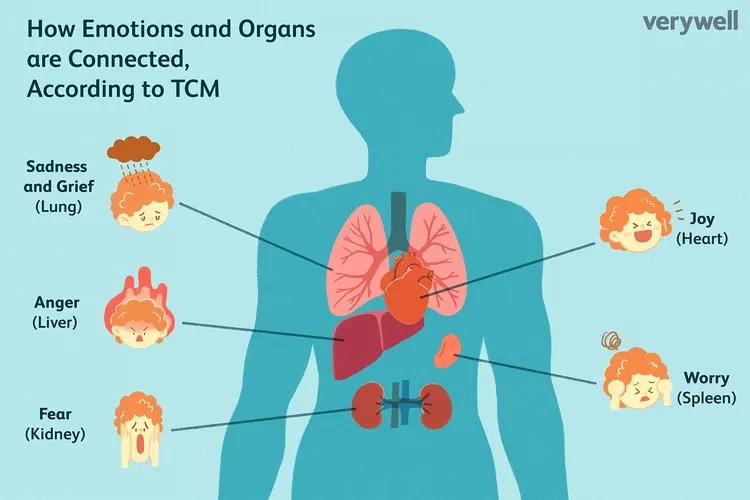
Unprocessed emotional energy becomes embedded in the fascia, muscles, and connective tissue, contributing to chronic tension, digestive issues, shallow breathing, and persistent negative beliefs.
Nervous System Dynamics: Polyvagal Theory and Emotional Release
Polyvagal Theory, developed by Dr. Stephen Porges, provides a framework for understanding how emotions are stored and released.

According to the theory:
- Ventral Vagal Pathway: Supports social engagement, calm states, and integration.
- Sympathetic Nervous System: Activates fight-or-flight, producing tension and readiness for action.
- Dorsal Vagal Pathway: Supports immobilisation, shutdown, and dissociation in response to overwhelming stress.
Anger stored in the body is often associated with sympathetic activation or incomplete dorsal vagal shutdown. Somatic release, particularly in the upper ribcage, liver, stomach, and solar plexus, stimulates the vagus nerve, helping the body return to a ventral vagal state, supporting emotional regulation, interoceptive awareness, and nervous system coherence.
Spinal Flow Doorways
The mid-thoracic spinal segments (T6–T9) are central to emotional storage and release.

These segments:
- Regulate fight-or-flight responses
- Influence diaphragmatic movement and respiratory function
- Connect with digestive organs, including the liver and stomach
Releasing stored emotion in the front of the body engages these spinal segments, allowing energy to flow along the spinal cord and mobilise neuromuscular pathways, promoting integration across fascia and the autonomic nervous system.
Fascia and Neuromuscular Awareness
The fascia — a dense connective tissue network surrounding muscles and organs — is highly responsive to emotion. Chronic tension in fascia can store stress and impact posture, mobility, and pain perception.
By cultivating neuromuscular awareness, clients can sense where tension is held and allow it to release through neurogenic tremoring, subtle movements, or somatic exercises. This enhances body-mind integration, increases interoception, and helps the nervous system down-regulate after activation.
Chakra Alignment and Somatic Healing
Somatic work can also reference energy centres of the body, particularly the solar plexus chakra (Manipura).
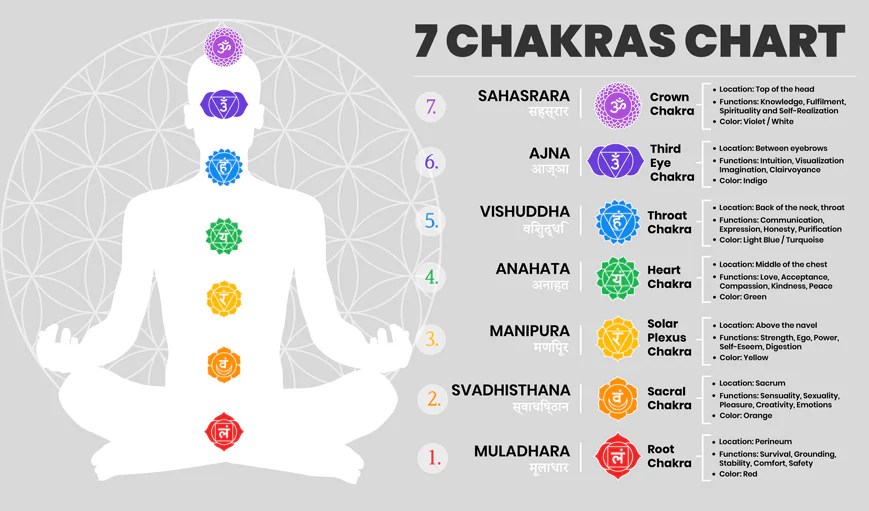
This chakra governs:
- Personal power
- Self-worth and confidence
- Autonomic and digestive function
Aligning the solar plexus through somatic work, breath, and vagal nerve stimulation supports energetic coherence while producing measurable physiological changes in heart rate variability, diaphragmatic movement, and vagal tone.
Neurogenic Release: The Body’s Natural Discharge
During session, clients may experience involuntary shaking or neurogenic tremoring, a physiological mechanism for discharging stored energy.
- Comparable to post-exercise muscle tremors
- Signals integration of psychological and somatic patterns
- Promotes parasympathetic activation and nervous system recalibration
Allowing these processes to unfold enables the body to metabolise stored emotion, preventing re-storing of tension or chronic patterns.
The Firefly Method®: Whole-System Integration
The Firefly Method® is a holistic psychosomatic approach that integrates:
- Psychological insight: Exploring limiting beliefs, intrusive thoughts, and emotional patterns
- Somatic awareness: Releasing stored tension in fascia, muscles, and organs
- Neurophysiological regulation: Engaging the vagus nerve, spinal doorways, and autonomic nervous system
- Energetic alignment: Working with the solar plexus and other energy centres for coherence
The Firefly Method® enables:
- Whole-body healing
- Reintegration of lost or disowned parts of self
- Alignment of the nervous system into coherence
- Lasting emotional regulation and physical function
Every session is intuitive, dynamic, and personalised to the client’s nervous system, readiness, and capacity. This is why full sessions are rarely filmed — the process unfolds uniquely, guided by the body in real time.
Key Takeaways
- Stored emotions are both physical and neurological — anger, frustration, and self-doubt are encoded in fascia, muscles, organs, and spinal segments.
- Every nervous system is unique — no two sessions are identical; releases manifest differently depending on capacity, openness, and integration ability.
- Polyvagal regulation is essential — releasing stored emotion stimulates the vagus nerve, promoting parasympathetic engagement, coherence, and interoception.
- Somatic release supports psychological integration — beliefs and emotions are processed alongside neuromuscular and spinal release.
- The Firefly Method® addresses the whole system — integrating psychology, somatic awareness, neuroscience, fascia, spinal flow, and energy for complete mind-body healing.
Conclusion
The body is a living archive of experiences, beliefs, and emotions. Chronic anger, self-doubt, and frustration are rarely “just in the mind” — they are embodied patterns influencing behaviour, physiology, and well-being.
Through somatic awareness, neurophysiological regulation, and holistic methods like The Firefly Method®, these patterns can be released, metabolised, and reintegrated. By working with the liver, stomach, solar plexus, spinal doorways, fascia, and vagus nerve, clients experience profound emotional release, nervous system coherence, and whole-body healing. Every session is unique because every nervous system is unique. Healing unfolds dynamically, intuitively, and fully tailored to the individual, allowing for psychological, somatic, and neurophysiological transformation.
The body always remembers — but with somatic integration, it can release, realign, and thrive.
 Firefly Somatics™
Leave a Reply