
Emotional triggers are often spoken about in the context of relationships, trauma healing and personal growth. Yet few people understand what is actually happening inside the brain and body when a trigger is activated. The experience can feel overwhelming, disorienting or even frightening, especially when the reaction feels disproportionate to the situation. But when we step into the neurobiology of a trigger, everything begins to make sense. A trigger is not irrational. It is biological, physiological and deeply rooted in the subconscious structures laid down in childhood.

To understand an emotional trigger is to understand your nervous system, your attachment system and the ingrained patterns of survival that helped you adapt to earlier environments. The nervous system is constantly scanning for signs of safety or danger. This process is driven by neuroception, an automatic detection of threat that happens beneath conscious awareness. When the nervous system perceives danger, whether real or imagined, the entire internal world reorganises itself around survival.
This is why emotional triggers feel so intense. They are not happening in the thinking brain. They are occurring in the emotional and survival centres of the brain, which communicate through the body at extraordinary speed. The moment a trigger hits, the limbic system takes over and the logical, reasoning part of the brain goes offline. You cannot think your way out of this state because the systems responsible for thinking are no longer in charge.
In this post we will explore what happens inside the mind, body and nervous system when you are triggered. We will look at the role of the limbic system, stress hormones, neuroception, the vagus nerve and the connection between trauma responses and attachment patterns. Most importantly, we will explore how to navigate a trigger not through force or thinking, but through feeling, presence and somatic awareness.
What Is an Emotional Trigger?
An emotional trigger is a stimulus that activates a strong internal reaction, often rooted in past experiences. The stimulus can be a word, tone of voice, gesture, smell, situation or relational cue. It does not matter what the stimulus is. What matters is what it represents to the subconscious mind.

Triggers activate implicit memory, which is the memory stored in the emotional brain and body before we developed conscious recall. These memories are not stored as stories or images. They are stored as sensations, emotions and energetic imprints. The trigger does not remind you of the past in a logical sequence. It reactivates the past as a physiological experience in the present.
This is why a trigger can feel like falling into a younger version of yourself. It is the neural pathways from childhood becoming reactivated, along with the survival responses you once needed to navigate your environment.
The Limbic System: Your Emotional Brain
When you encounter a trigger, the limbic system is the first part of the brain to react. The limbic system controls emotions, implicit memory, attachment bonding and survival responses. It processes cues of threat far faster than the thinking brain can analyse them.
Within the limbic system, the amygdala plays a particularly important role. It acts like an alarm. It continually scans your internal and external world for signs that match previous experiences of danger. The moment something resembles past pain, even subtly, the amygdala fires the alarm.
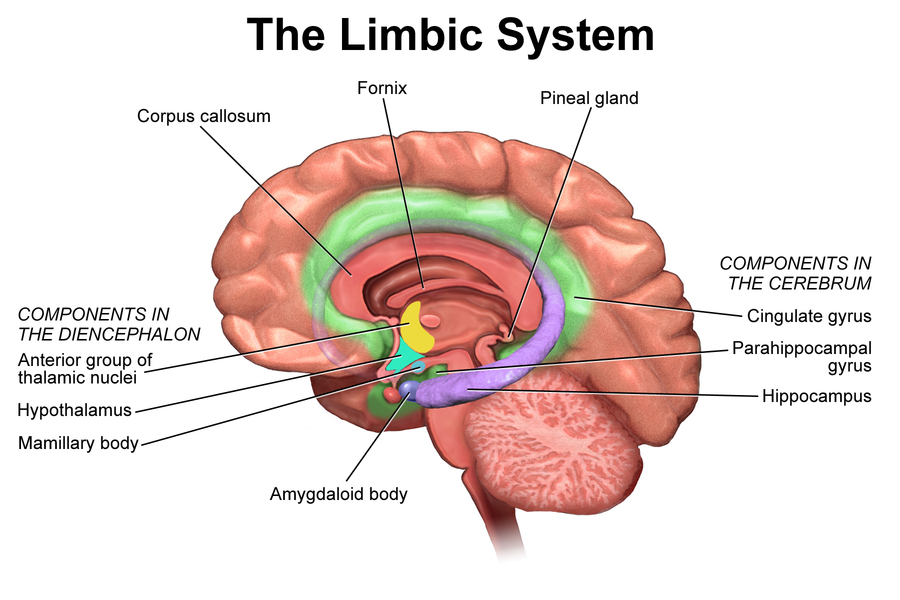
Once this alarm is activated, the amygdala sends signals to the hypothalamus, which communicates with the endocrine system and adrenal glands. This sets off the cascade of stress hormones that prepare the body for survival.
At this stage, the prefrontal cortex, which governs logic, decision making and rational thought, shuts down. It is not needed for survival. During threat the body does not prioritise reflection or reasoning. It prioritises staying alive.
This is why arguments become circular. This is why you cannot access empathy, openness or calm during a trigger. It is not a personal failing. It is neurobiology.
Stress Hormones and the Survival Response
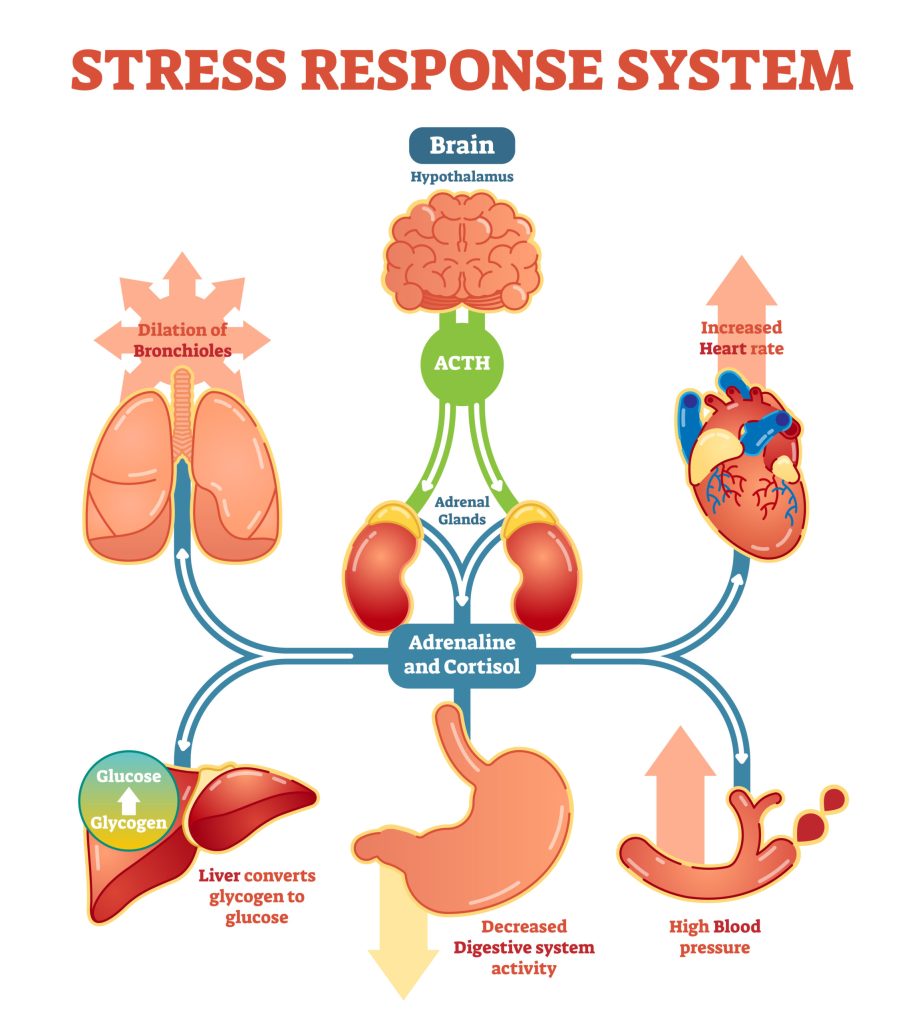
When the limbic system identifies a threat, the body enters a state of mobilisation. Cortisol and adrenaline surge through the bloodstream. Heart rate increases. Muscles tense. Breathing becomes shallow. Blood flow moves away from digestion and the reproductive organs and is redirected to the arms and legs to prepare for fight or flight.
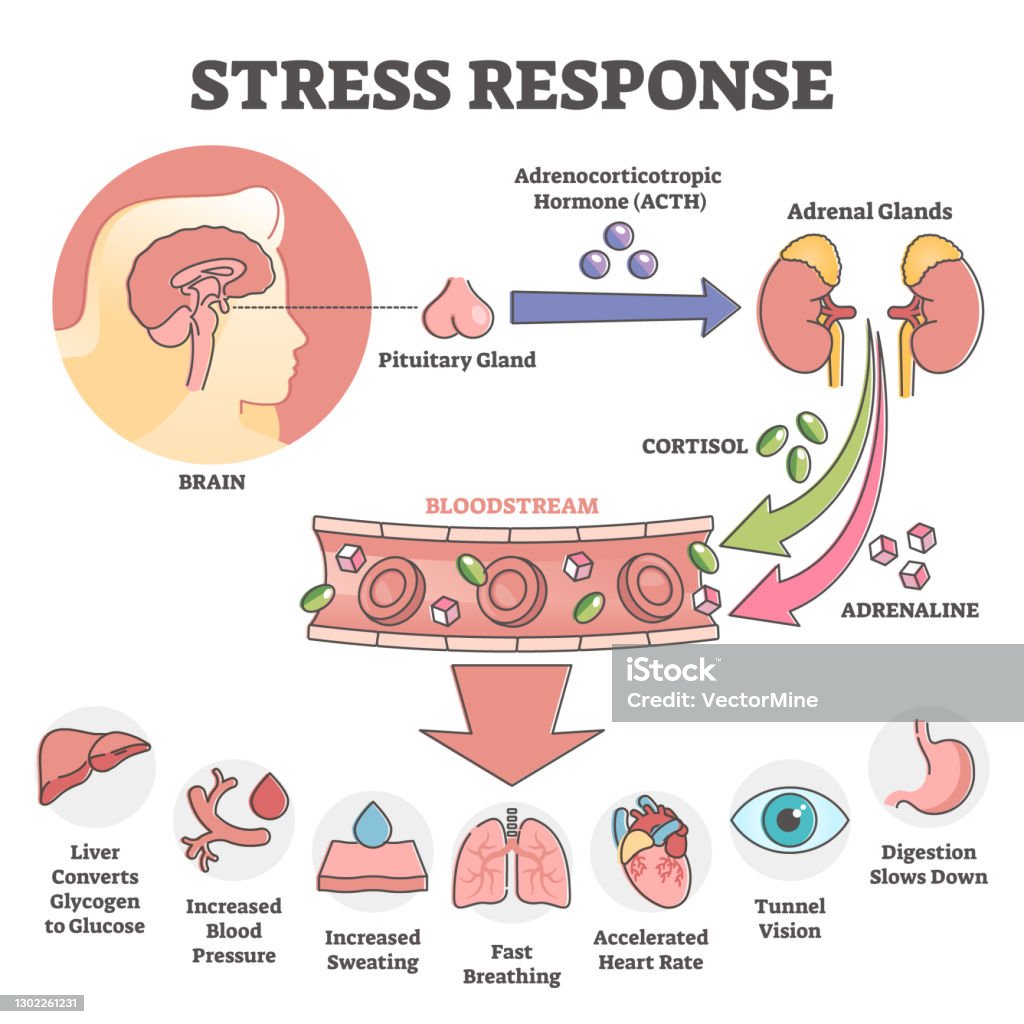
Cortisol increases glucose in the bloodstream to provide quick energy for the body to act. Adrenaline heightens alertness, sharpens the senses and prepares the system to respond instantly to danger. This is an ancient design intended to help us survive predators or physical threats.
The issue is that the modern threats we experience are often emotional, relational or symbolic. But the body does not distinguish between the threat of abandonment and the threat of a tiger. The nervous system reacts with the same physiological intensity.
If the body does not sense that fight or flight is possible or effective, it may shift into the freeze response. This is a state of immobilisation. The system becomes overwhelmed and shuts down. You may feel numb, dissociated, spaced out or unable to move or speak. Freeze is not weakness. It is a protective state.
If you have a history of complex trauma, chronic stress or inconsistent attachment, these responses may activate more quickly or more intensely. The nervous system becomes sensitised to cues of threat. What may seem small to the thinking brain can feel enormous to the emotional brain.
Neuroception: The Unconscious Scan for Safety
The term neuroception was introduced by Dr Stephen Porges, the founder of Polyvagal Theory. Neuroception refers to the unconscious process in which the nervous system constantly scans the environment for cues of safety, danger or life threat. This scan is informed by sensory information from the eyes, ears, skin, smell, facial expressions, tone of voice and body language. It also includes internal signals from the organs and the gut, which communicate through the vagus nerve.

Neuroception does not involve conscious thought. This is why triggers feel like they happen instantly. They do. Neuroception works faster than cognition.
If your earlier environment was unpredictable, rejecting or frightening, your neuroception may be wired to detect danger even in neutral or supportive situations. This is not a flaw. It is an adaptation. The body learned to survive in uncertainty by anticipating threat. When neuroception detects danger, the vagus nerve sends signals from the brain to the heart, lungs, gut and digestive system, preparing the body to respond. Once this activation begins, the entire physiological state shifts into survival mode.
The Vagus Nerve: The Mind-Body Connection
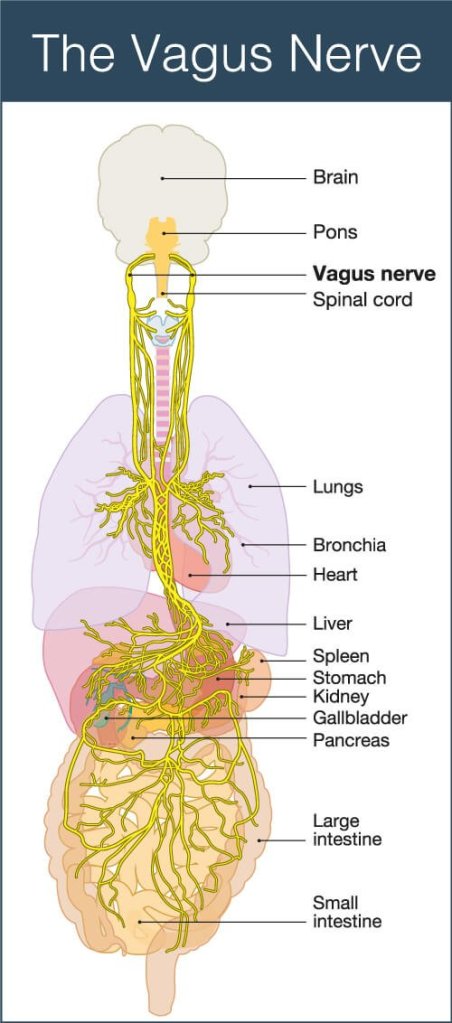
The vagus nerve is the longest nerve in the body. It carries information between the brain, heart, lungs, gut and organs. It is the primary channel through which emotional and physical states communicate.
When you are triggered, neurotransmitters travel along the vagus nerve at extraordinary speed. This is why you feel emotional reactions in your stomach, chest or throat before you can mentally understand what is happening. The body always knows before the mind.
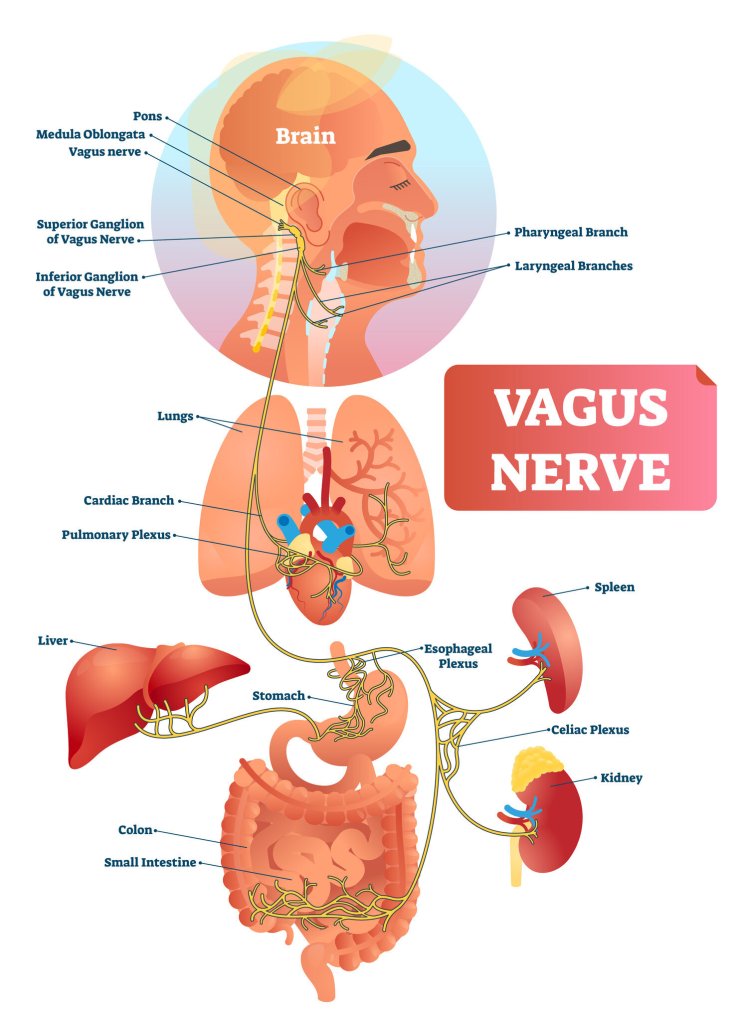
The vagus nerve is responsible for regulating heart rate, digestion, breath, immune system responses and inflammation. When a trigger activates a stress response, vagal tone shifts and the parasympathetic nervous system (the system of rest, repair and connection) withdraws. The sympathetic nervous system (the system of mobilisation) takes over.
This creates the physiological sensations associated with being triggered: rapid heartbeat, shaking, sweating, nausea, tightness in the chest, blurred vision or tunnel vision, dizziness or emotional waves flooding through the body. These sensations are not random. They are the body preparing to defend itself.
Attachment, Trauma and Survival Responses
The survival responses of fight, flight, freeze and fawn are deeply connected to our attachment patterns. In early development, our nervous system becomes shaped by how caregivers attuned to us. If our emotional needs were met with consistency, empathy and presence, we developed patterns of safety. If our needs were met with inconsistency, neglect, fear or hostility, our nervous system adapted to survive the environment.
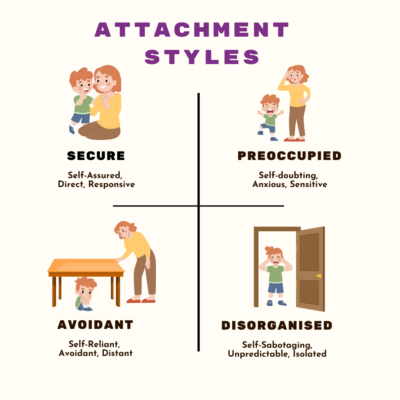
Fight becomes the instinct to protect through anger, control or defensiveness. Flight becomes the instinct to escape, avoid or shut down. Freeze becomes the instinct to disconnect or numb out. Fawn becomes the instinct to appease, please or merge with another to avoid conflict.
These patterns are not chosen. They are automatic. They are survival strategies encoded in the nervous system long before the conscious brain developed.
When you are triggered, you are not reacting to the present moment. You are reacting from your earliest wiring, your attachment injuries and the emotional imprints stored in the limbic system. The nervous system does not perceive the trigger as happening now. It perceives the trigger as happening again.
The Physiology of a Trigger: Why the Body Takes Over
During an emotional trigger, the body experiences a powerful physiological shift out of homeostasis. This is why you feel symptoms so intensely. The sensations may include:
- racing heartbeat
- trembling or shaking
- waves of emotion rising suddenly
- heat or cold
- tightness in the chest or constriction in the throat
- nausea or digestive discomfort
- sweating or clamminess
- feeling spaced out or dissociated
- numbness or tingling
- blurred or narrowed vision
- inability to find words or make sense of thoughts
These responses are not psychological alone. They are physiological. The body is preparing to protect you. It is responding to the perceived threat with the full power of your survival system. This is why you cannot simply “calm down” or “think clearly”. The parts of the brain responsible for logical decision making, language processing and emotional regulation are offline. The emotional and survival centres have taken over.
You Cannot Talk Your Way Out of a Trigger
During a trigger, the limbic system and brainstem dominate. These regions are non verbal. They do not respond to logic or language. They respond to sensation, emotion and safety cues. Trying to talk yourself out of a trigger is like trying to reason with a fire alarm. The alarm is not designed to think. It is designed to respond. The only way to change the reaction is to change the internal state.
This is why somatic healing is so essential. The body must be included in the process. You have to feel your way through the sensations rather than thinking your way out of them. You cannot heal a trigger through suppression. You can only heal it through witnessing, allowing and integrating the sensations and emotions that arise.
Feeling Your Way Through a Trigger
When you are triggered, the body becomes your guide. Every sensation is communication. Every wave of emotion is information. The body is not trying to punish you. It is trying to speak to you.
Think of the body like a navigation system. The sensations guide you towards the subconscious belief or unresolved emotional layer that needs attention. You may be feeling:
- the belief that you are unsafe
- the belief that you will be abandoned
- the belief that you have done something wrong
- the belief that you are unlovable
- the belief that conflict means danger
These beliefs were formed in moments when your system was overwhelmed, overstimulated or unsupported. They rise to the surface during a trigger not to harm you, but to be healed.
Feeling is the pathway to regulation. When you allow the sensations to move through the body, the nervous system can complete the survival cycle. When you resist or suppress the sensations, the cycle becomes trapped, and the trigger remains unresolved.
To heal, the body must finish what it started.
Using the Trigger as a Tool for Healing
A trigger is not a setback. It is a doorway. It shows you the exact subconscious programme that is still active. It shows you the attachment wound that is ready to be integrated. It shows you the part of yourself that is calling for presence, compassion and attunement.
You can use a trigger to:
- identify the belief beneath the reaction
- uncover unresolved childhood imprints
- understand your survival response
- explore unmet emotional needs
- reconnect with your body
- strengthen your capacity for regulation
- deepen your sense of safety within

The trigger is the communication. The body is the messenger. The feeling is the gateway. The more willing you are to feel your internal experience without judging it or resisting it, the more the nervous system learns that it is safe to move through these states. Over time, the intensity of triggers decreases. The emotional charge diminishes. The body becomes more resilient, more regulated and more aligned with your conscious self.
The Return to Safety
Once the sensations are allowed to move through the body, the parasympathetic nervous system begins to reengage. The heart rate slows. Breathing deepens. Cortisol levels drop. Muscles soften. The body returns to equilibrium. Only then does the prefrontal cortex come back online. This is the moment where clarity returns. Insight becomes available. Reflection is possible. You can look back on the experience with understanding rather than fear.
This is the cycle of regulation. Activation, expression, completion, integration.
When you learn to work with your triggers rather than against them, you begin to form a new relationship with your body. Instead of fearing the reactions, you begin to trust them. Instead of collapsing into old patterns, you begin to expand into new states of awareness. Triggers become stepping stones rather than setbacks.
Your Body Is Not the Enemy
Your body is not betraying you when you are triggered. It is protecting you. Every reaction you have today was once the strategy that helped you survive something overwhelming. The intensity you feel is not weakness. It is the echo of a younger self calling for safety, connection and understanding.
When you learn to listen to your body, to honour the sensations, and to move through them rather than suppress them, you rewrite your internal wiring. You change the neurobiology of your emotional responses. You create new patterns of embodiment, new pathways of safety and new ways of relating to yourself and others.
The nervous system is not fixed. It is plastic. It is changeable. It is capable of profound transformation. Every trigger is an invitation to evolve. Every physiological sensation is a message. Every emotional wave is a guide.
Let your body support you. Let it show you what is ready to be released. Let it lead you back home.
 Firefly Somatics™
Leave a Reply